A septic system cannot be designed in the abstract and then fitted onto whatever the site happens to look like when installation day arrives. The soil evaluation drives the system design, the system design drives the drain field placement, and the drain field placement drives the clearing scope. Get the clearing right and every subsequent phase of the project proceeds on a prepared surface. Skip steps or clear in the wrong sequence and the project carries those compromises through installation.
Land clearing for a septic installation in North Georgia is not general property clearing. It is targeted work focused on the specific areas the installation requires: the equipment access routes, the tank footprint, the distribution system path, and above all, the drain field zone. Each of those areas has specific requirements that a clearing scope needs to account for before any equipment arrives.
What the Clearing Scope Covers for Septic Work
Vegetation Removal
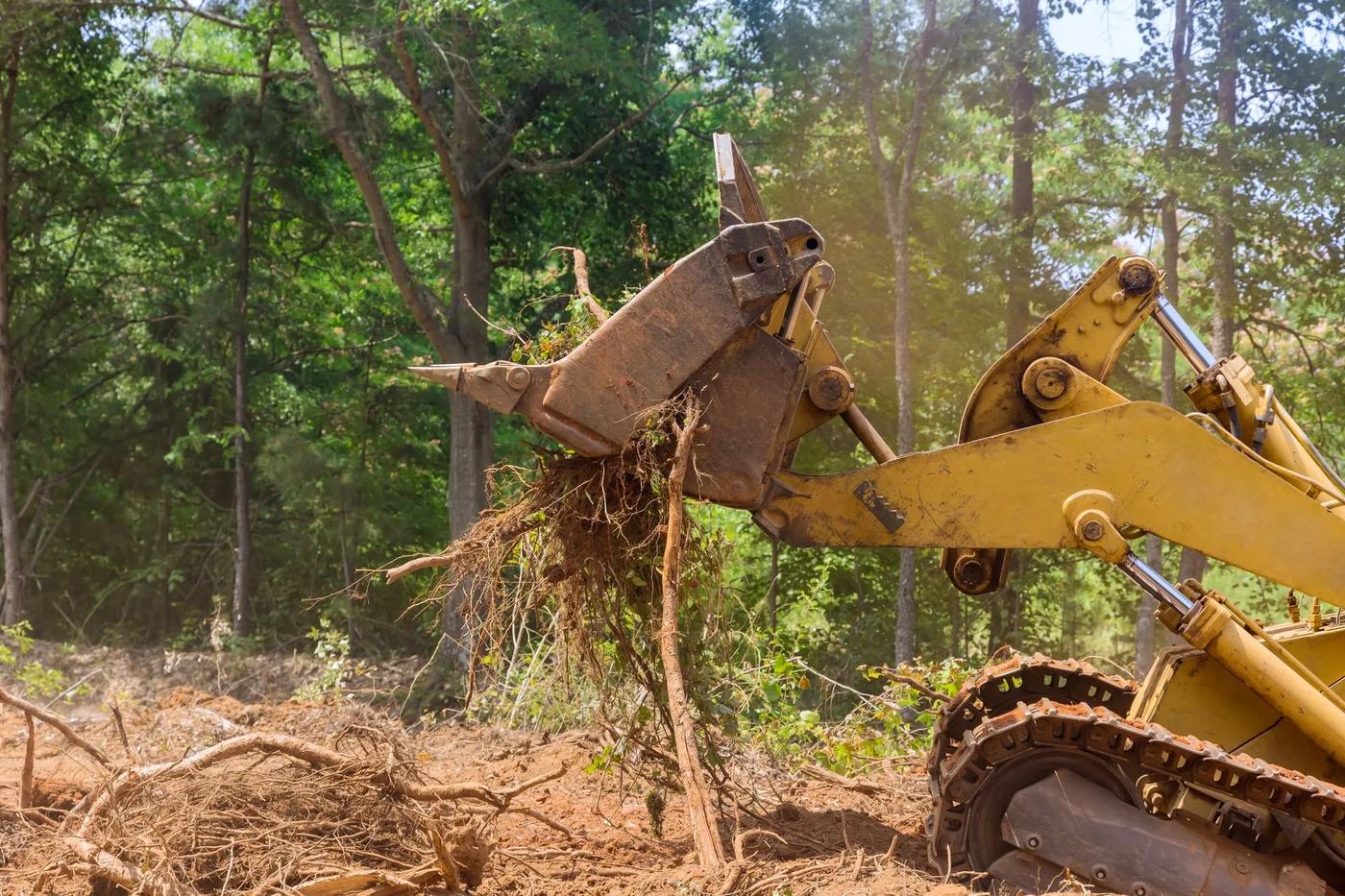
The obvious part of clearing is removing trees, shrubs, and ground cover from the installation area. Less obvious is the standard that applies to the drain field zone specifically. Stump grinding in the drain field footprint is not optional and not negotiable.
Stumps left beneath a drain field decay over years. As organic material breaks down underground, it creates voids. Those voids cause soil settlement above the drain field lines, which in turn causes pipe deflection and distribution problems that would not have occurred in undisturbed soil. Complete stump and major root removal from the drain field footprint before installation is the correct standard, and it adds meaningful work to the clearing scope that property owners sometimes try to defer for cost reasons. The cost of addressing settlement damage years later is always higher than removing the stumps correctly at clearing time.
Equipment Access Establishment
The excavation equipment that installs a septic system in North Georgia is heavy. Tracked excavators, vacuum trucks for tank placement, and delivery trucks for tank and pipe materials all need a path from the road to the installation area that does not cross the drain field, does not damage existing landscaping that is not being cleared, and provides safe working conditions for the crew.
On North Georgia properties with any significant topography, which describes most rural residential parcels across Jackson, Barrow, and Hall counties, planning that access route before clearing begins prevents situations where the most direct equipment path turns out to cross the drain field or require significant additional grading to make usable. Access route planning is part of the site assessment that precedes clearing, not something figured out when the excavator shows up.
Erosion Control
North Georgia's red clay soil is highly susceptible to erosion when exposed and disturbed. A cleared septic installation site during spring rain season can lose significant topsoil to runoff within days of clearing, depositing red clay sediment on neighboring properties and into drainage features. Georgia's erosion and sedimentation regulations require erosion control measures on disturbed sites, and county inspectors enforce compliance on permitted septic installation projects.
Silt fencing established along the downslope perimeter of the clearing area, combined with surface protection over exposed soil in areas not immediately being worked, prevents the most significant erosion events. This is not optional compliance theater. It is a genuine protection for the soil structure that the drain field installation will depend on.
The Sequence That Avoids Costly Mistakes
The most common sequencing error in septic installation projects is clearing before the permit is issued. The permit establishes the approved locations for the tank and drain field based on the soil evaluation results and setback requirements. Clearing before that approval exists means clearing based on assumed locations that may change when the actual permit conditions are reviewed.
If the permit comes back with a different drain field location than the one cleared, the project has now cleared the wrong area, possibly damaged soil in the intended drain field zone through equipment traffic, and left an uncleaned area where actual installation will occur. Correcting that costs more than doing it in the correct sequence.
The correct sequence is soil evaluation, permit application, permit issuance, then clearing based on the approved installation plan. Your contractor handles the permit application process. Your role is confirming that clearing does not begin before permit approval is in hand.
North Georgia Terrain Considerations
The foothills terrain that characterizes the rural residential market across this region creates clearing challenges that flat-terrain markets do not face. Slopes affect equipment access, drain field placement, and post-clearing erosion risk simultaneously.
Steep slopes in the drain field zone may require grading adjustments to achieve the level plane that conventional drain field installation requires. If the slope is significant enough that gravity distribution of effluent will concentrate at the downhill end of the field, the system design may call for pressure distribution rather than gravity, which affects both cost and installation sequence. Identifying this condition during the site assessment before clearing begins avoids surprises that are far more expensive to accommodate mid-project.
Rock close to the surface, which occurs in some upland areas across the North Georgia foothills, adds to both the clearing and excavation scope in ways that cannot be fully assessed until test pits are dug during the soil evaluation. The soil scientist's report will identify shallow rock presence where encountered, and that information should inform the clearing and excavation cost estimates before any contract is signed.
Frequently Asked Questions
Does land clearing need to happen before a septic system is permitted in Georgia?
The soil evaluation that informs the permit application requires clear access to dig test pits in the proposed installation area, but full clearing typically waits until the permit is issued and the installation location is confirmed. Conducting the soil evaluation requires only enough clearing to access the proposed drain field zone with hand tools. Full equipment clearing follows permit issuance and is scoped to the approved installation plan.
Can a property owner do their own land clearing before a septic installation in Georgia?
Property owners can clear vegetation from their own land. However, the specific site preparation work associated with a permitted septic installation, including grading to the required specifications and erosion control installation meeting Georgia EPD standards, must be performed correctly to support the inspection and permitting process. Most property owners who attempt partial self-clearing find that the stump grinding and root removal from the drain field zone requires equipment they do not have, and a second mobilization of professional clearing equipment to complete that work costs more than doing it in a single coordinated effort.
What happens to cleared material on a North Georgia septic installation site?
Cleared vegetation is typically chipped on-site where volume permits, or hauled to an approved disposal facility for larger material. Stumps ground in the drain field zone produce chips that are removed from the drain field footprint to prevent organic material accumulation that would interfere with compaction. The site assessment before clearing determines the disposal approach based on volume, access, and local disposal options.
Clearing Done Right From the Start
Septic & Sewer Solutions handles land clearing and site preparation as part of our integrated installation process across North Georgia. When clearing, grading, and installation are coordinated by the same crew under the same permit, the project proceeds without the gaps and miscommunications that arise when separate contractors handle adjacent scopes. Contact us to discuss your project.