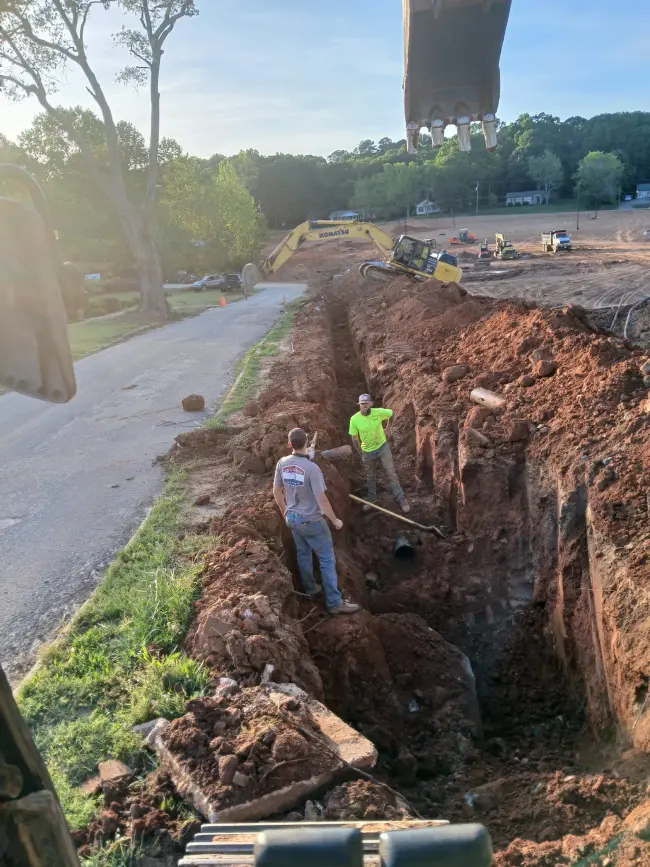
Two homes on the same street in North Georgia can have dramatically different sewer line histories. One produces no problems for 40 years. The other requires excavation and pipe replacement in year twelve. The difference is not luck. It is pipe material, installation quality, tree proximity, and the decisions made in the yard above the line over the years between those two outcomes.
Understanding what makes a sewer line resilient, and what degrades it, lets you evaluate the condition of what you have and make decisions that extend its useful life rather than shorten it.
Pipe Material Is the Starting Point
The material buried beneath your property is the single largest determinant of sewer line longevity, and it is worth knowing what you have.
PVC
Polyvinyl chloride pipe has been the residential installation standard in North Georgia since the early 1990s. It does not corrode, resists root penetration better than older materials through the design of its sealed joints, and has a design service life of 50 years or more under normal conditions. A PVC sewer line properly installed on a property without aggressive root conditions close to the line path should deliver its full service life with periodic inspection and no structural intervention.
Cast Iron
Cast iron was the residential standard from roughly the 1950s through the early 1980s. It is significantly more durable than clay tile but corrodes internally over decades from hydrogen sulfide exposure. The interior corrosion product accumulates along the pipe walls, progressively narrowing the effective bore. In North Georgia cast iron lines approaching 40 years of age, that narrowing is often significant enough to make the pipe prone to recurring slow drainage and clogs that will not resolve permanently through clearing alone.
Clay Tile
Clay tile sewer pipe, found in homes built before 1960 in this region, uses butt joints between sections rather than sealed connections. Those joints rely on soil pressure to maintain alignment and are the primary vulnerability of this material. North Georgia's clay soil expands when wet and contracts when dry, and that seasonal movement works on clay tile joint alignment over decades. The joints gap slightly, create root entry points, and allow groundwater infiltration that adds unintended volume to the sewer system. Clay tile lines past 50 years of service are approaching the end of their reliable life in this region regardless of maintenance history.
How North Georgia's Clay Soil Affects the Line Over Time
Soil movement is a stress that PVC handles better than older materials, but it affects every pipe type over sufficient time. The seasonal expansion and contraction cycle of clay soil generates forces at pipe joints that cumulatively cause bellying in sections with inadequate bedding material beneath the pipe, offset joints where sections shift horizontally or vertically, and in clay tile and older cast iron, gradual joint separation that creates the entry points that root systems find.
A properly installed sewer line has compacted granular bedding material beneath the pipe that resists settling and maintains the designed grade from access point to destination. Lines installed without adequate bedding, or through soil that was not properly compacted after installation, are more susceptible to the settling and offset issues that develop over years of seasonal soil movement in clay-heavy ground.
This installation quality variable is invisible once the line is backfilled and it does not show symptoms until the settling and offsetting have been happening for years. Camera inspection is the only way to assess the actual current condition of the line regardless of when and how it was installed.
What Protects Resilience Over the Long Term
Long-term resilience is not maintained through a single action. It is a combination of consistent behaviors and periodic evaluation.
Keeping Grease Out of the Line
Grease that enters the sewer line from kitchen drains solidifies as it cools and builds up on the pipe wall in layers. On a PVC line in good condition, grease accumulation is manageable and clears with hydrojetting when it becomes significant. On a cast iron line with roughened interior walls from corrosion, grease adheres more readily and accumulates faster. In a line that already has partial root intrusion, grease catches on the root mass and accelerates the blockage timeline dramatically.
Eliminating cooking grease from kitchen drain inputs prevents the accumulation problem at its source. Collect it in a container and dispose of it in the trash.
Controlling What Enters the Drain
Flushable wipes, paper towels, and other non-toilet-paper materials that enter the line through toilets do not break down in transit. They catch on any restriction in the line, whether a partial root intrusion, a grease deposit, or a slightly offset joint, and create blockages that would not have formed from toilet paper alone.
Periodic Camera Inspection
Camera inspection is the only mechanism that provides current condition data on a buried line. The frequency appropriate for your property depends on pipe material and tree proximity. A PVC line with no mature trees close to its path can reasonably go seven years between inspections. An older line with clay tile joints and significant tree coverage warrants inspection every three to four years. Setting the interval based on the actual risk factors of your specific property rather than a generic recommendation is itself a resilience practice.
Frequently Asked Questions
How long does a sewer line last in North Georgia?
PVC pipe installed correctly has a design service life of 50 years or more. Cast iron from the mid-20th century is approaching the end of reliable service life at 40 to 60 years depending on interior corrosion accumulation. Clay tile can last decades if joints remain intact but is increasingly vulnerable to root intrusion and joint separation as it ages in North Georgia's expansive clay soil. Pipe material, tree proximity, installation quality, and maintenance history together determine actual service life.
What is the best thing I can do to extend my sewer line's life?
Know your pipe material and tree proximity, set an inspection interval appropriate for your specific risk level, and stop putting grease down the kitchen drain. Camera inspection at the right frequency catches root intrusion and buildup before they require pipe repair. Grease elimination prevents the accumulation problem that accelerates blockage in any pipe condition.
Can a deteriorating sewer line be rehabilitated short of full replacement?
In some cases, yes. Pipe relining, where a resin-impregnated liner is inserted and cured in place inside the existing pipe, can restore structural integrity and smooth the interior surface of a deteriorating line without excavation. It is applicable where the pipe is structurally compromised but not collapsed or severely offset. A thorough camera inspection determines whether the line is a candidate for lining or requires excavation and replacement.
Assess Your Sewer Line's Current Condition
Septic & Sewer Solutions provides sewer line camera inspections and condition assessments across North Georgia. If you do not know your pipe material, current condition, or appropriate inspection interval, contact us to establish that baseline.