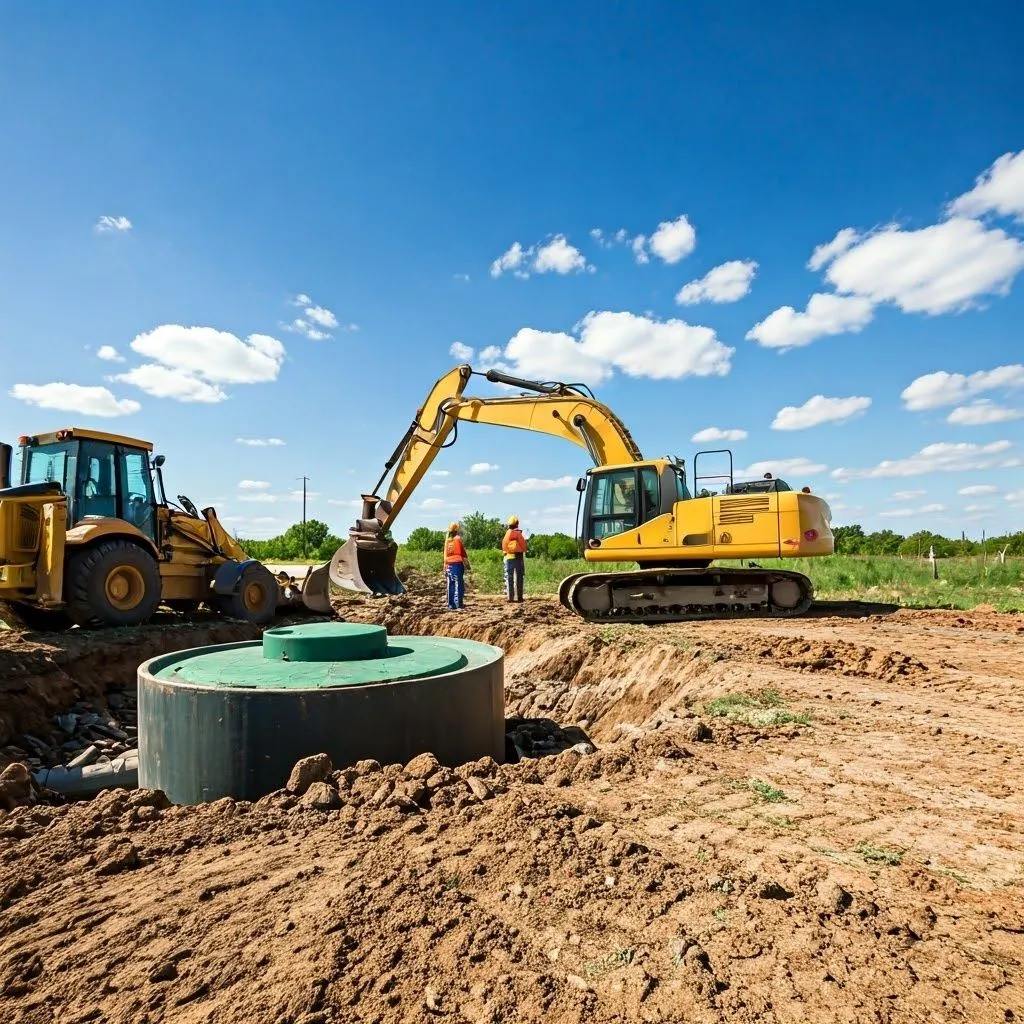
Demolition in the context of septic and sewer work does not mean bringing down buildings. It means the systematic removal of existing underground infrastructure, the decommissioning of components that can no longer safely remain in the ground, and the preparation of a site for new installation where previous systems occupied the space.
It is also some of the most regulated work in the septic industry in Georgia, because improper handling of existing septic infrastructure creates real environmental and safety risks that follow the property for years. Understanding what the work involves and why licensing requirements exist gives property owners the context to oversee this phase of a project intelligently.
Decommissioning an Existing Septic System
What Georgia Law Requires
When a septic system is no longer going to be used, whether because it has failed and is being replaced, because the property is connecting to county sewer, or because a new system is being relocated, the existing tank cannot simply be abandoned in place without documentation. Georgia's on-site sewage management system rules require permitted decommissioning.
The decommissioning process involves pumping the tank completely, with the contents transported and disposed of at an approved septage disposal facility by a licensed hauler, followed by rendering the tank structurally inert. The tank is either excavated and removed from the property entirely, or filled with concrete or other approved material and the inlet and outlet ports collapsed to prevent any future use or entry.
This process requires a permit from the county Environmental Health office and must be performed by or under the supervision of a licensed contractor. It is inspected by the county before final approval, and the completion is recorded in county records. That record establishes that the abandoned tank was properly handled and eliminates the liability that an undocumented abandoned tank creates.
Why Improperly Abandoned Tanks Are a Serious Problem
A concrete septic tank left empty in the ground without proper decommissioning is a structural hazard that compounds over time. Empty concrete tanks lose the lateral soil support that wastewater volume provided. The tank walls and lid, no longer reinforced by internal pressure, become susceptible to collapse under surface loading. Tanks in this condition have collapsed under vehicles, heavy equipment, and in some cases foot traffic, particularly older tanks where the concrete has experienced decades of corrosion.
An undocumented abandoned tank on a property also creates title and liability issues. Future buyers, contractors, and property users have no way of knowing it exists. Discovery during subsequent site work can delay projects, create cost disputes, and in the case of a collapse incident, generate significant liability for the property owner who did not document its decommissioning.
Structural Demolition for Site Preparation
Some replacement septic projects and new construction situations require removing above-ground or shallow-buried structures before installation can proceed.
A concrete slab over the proposed drain field area, an outbuilding sitting on the tank replacement footprint, or deteriorated concrete pad that was part of a previous use of the property all represent conditions where structural removal is the first step of the installation sequence. The connection to the septic project is not that demolition is inherently septic work, but that the septic installation cannot proceed correctly without the site being clear of conflicting structures.
North Georgia-Specific Considerations for Structural Demolition
North Georgia's clay soil creates conditions that affect concrete demolition specifically. Concrete in contact with clay for extended periods, particularly in areas with the seasonal moisture variation characteristic of this region, often has irregular bearing and unpredictable fracture behavior when broken. Rubber-tired equipment that performs well in drier conditions can create ground disturbance in wet clay that complicates subsequent grading work. Coordinating demolition timing with soil conditions and the overall installation schedule prevents the situation where demolition creates a working surface problem for the installation crew.
All demolition work near existing underground utilities requires locating before excavation or breaking begins. The 811 call-before-you-dig process applies to demolition as fully as it applies to new installation excavation. Septic, sewer, water, gas, and electrical lines that were not the focus of the demolition scope can still be present in the work area.
Old Underground Infrastructure Removal
On older North Georgia properties with long histories of use, unknown or poorly documented underground infrastructure is a real consideration for any significant site work.
Old cisterns from before municipal water service reached rural areas, concrete-lined drainage structures, abandoned clay tile sewer lines from previous residential or agricultural use, and old septic components that were informally abandoned decades ago can all be present beneath properties where the current owner has no knowledge of them. Encountering unexpected underground structures mid-project creates scope changes, schedule delays, and cost increases that early investigation can prevent.
Ground-penetrating radar surveys of the proposed installation area before demolition and excavation begins identifies subsurface features without digging. On properties with significant historical use or where previous owners may have informally abandoned infrastructure, this pre-work investigation is often worth its cost in project clarity.
Any subsurface feature that was part of a previous wastewater system must be properly decommissioned under permit regardless of how long it has been inactive. Organic material remaining in old systems continues to decay and can create voids, drainage problems, and soil contamination that affect the performance of new installation above and around it.
Why Licensed Contractors Are Required for This Work
The pumping and transport of septic tank contents requires a licensed septage hauler certified by Georgia EPD. The permit and inspection for decommissioning requires a licensed septic contractor. Structural demolition near underground utilities requires knowledge of locating requirements and safe work practices that unlicensed operators may not have.
Beyond the regulatory requirements, the practical reason is straightforward. Demolition work that creates unexpected problems during a septic project, whether a broken utility line, a tank not properly emptied before filling, or a structural collapse of improperly handled concrete, creates cost and delay that falls on the property owner. Working with contractors who know the requirements and follow the process protects against those outcomes.
Frequently Asked Questions
Is a permit required to abandon an old septic tank in Georgia?
Yes. Abandonment of an existing septic system in Georgia requires a permit from the county Environmental Health department and must be performed by or under supervision of a licensed contractor. The tank must be pumped and the contents disposed of by a licensed septage hauler. The tank is then either removed or rendered structurally inert under the permitted process. Abandoning a tank without a permit creates liability that follows the property.
What happens to the old tank when a septic system is replaced in Georgia?
The old tank is pumped and either excavated and removed from the site or filled and abandoned in place under a county-issued permit. The decision between removal and abandonment in place depends on tank location, depth, condition, and access for removal equipment. Your contractor handles the permit, pumping, and chosen decommissioning method as part of the replacement project.
Do I need demolition work before connecting to county sewer in Georgia?
If the property has an existing septic system, yes. Georgia requires the existing system to be properly decommissioned when a property connects to county sewer. The decommissioning must be permitted and inspected by the county Environmental Health office, and the sewer connection cannot receive final approval without documentation that the old system was handled correctly.
Full-Scope Project Management in North Georgia
Septic & Sewer Solutions manages demolition, decommissioning, clearing, and installation as an integrated process across Jackson, Hall, Barrow, and surrounding North Georgia counties. When one crew handles the full scope under a single permit, the project moves without the gaps that arise between separate contractors handling adjacent work. Contact us to discuss your project scope.