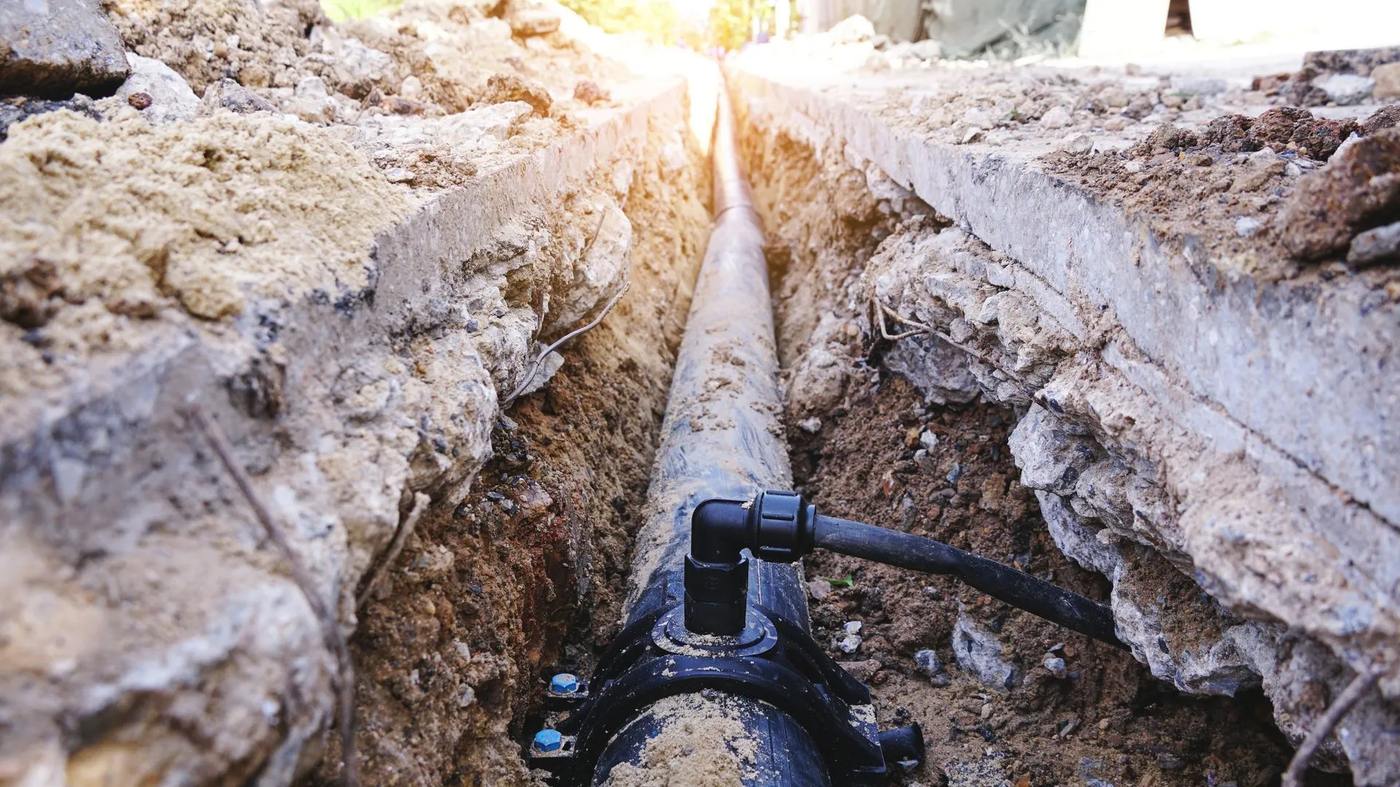
The majority of sewer line emergencies we respond to in North Georgia share a consistent characteristic: there were warning signs weeks or months before the failure that were either missed or set aside to address later. Later became an emergency. The repair scope at the emergency stage is many times what it would have been at the warning sign stage, and the timeline — compressed, inconvenient, and driven by the failure rather than the homeowner's schedule — is entirely preventable.
Understanding what actually causes sewer line failures in this region and what the early signals look like changes the calculus. A condition caught at 20% pipe obstruction is a mechanical clearing job. The same condition at 90% obstruction is an excavation project.
What Causes Sewer Line Failures in North Georgia
Root Intrusion
Tree roots are the leading cause of sewer line damage on residential properties in this market. The sewer line carries warm, nutrient-rich moisture that root systems detect and pursue, and they do so methodically. Roots enter through the joints between pipe sections, through hairline cracks, and through the corroded ends of older clay tile pipe sections. Once inside, they grow, branch, and eventually create obstructions that trap debris, narrow the effective bore of the pipe, and ultimately block it entirely.
North Georgia properties typically have significant mature tree coverage — oaks, sweetgums, silver maples, pines — and the root systems on these species extend considerably beyond what is visible above ground. A tree that appears a safe distance from the sewer line path on paper may have roots reaching the pipe by year ten of its growth. Properties with clay tile sewer pipe from older construction are particularly vulnerable because clay tile joints are not sealed and gap slightly over time, creating entry points that roots find reliably.
Pipe Material Deterioration
Not every North Georgia home has the same sewer line material, and the material matters significantly for how the line ages and what threatens it.
Clay tile pipe, common in homes built before 1960, uses butt joints rather than sealed connections. Those joints allow ground movement and root intrusion over time. The pipe itself is brittle and susceptible to fracture from soil loading changes. Cast iron, the residential standard from roughly the 1950s through the early 1980s, corrodes internally from hydrogen sulfide over decades. The corrosion product narrows the effective pipe diameter and becomes a catching surface for grease and debris, progressively moving toward chronic slow drainage and recurring clogs. PVC pipe installed from the 1990s onward is the most resistant to both root intrusion and corrosion, but it is not immune to either on properties with aggressive root conditions.
Grease and Debris Accumulation
Grease poured down kitchen drains does not travel cleanly through the sewer line and out to the street or septic tank. It cools, solidifies, and adheres to the pipe wall in layers. Those layers narrow the effective pipe diameter over years of accumulation and create a catching surface for food particles, soap residue, and other material that would otherwise flow through. The combination progressively restricts flow until a complete blockage occurs.
This is a maintenance behavior issue, not a structural one. The fix is permanent and free: collect cooking grease in a container and dispose of it in the trash. Nothing containing significant grease, fat, or oil goes down the kitchen drain in a home on a septic system.
Warning Signs That Appear Before the Emergency
Recognizing early signals and acting on them is the entire preventive strategy in practical terms. The sequence of symptoms that precedes a sewer line backup is consistent enough to be reliable.
Multiple slow drains across different areas of the house at the same time, when the rest of the plumbing works normally, indicate a restriction developing in the main line below where the branch lines connect. A single slow fixture is a local issue. Multiple slow fixtures simultaneously point to the main line.
Gurgling sounds at drains or toilets after other fixtures are used indicate air displacement from restricted flow. When the dishwasher runs and the toilet gurgles, or flushing the toilet produces noise at the floor drain, the line is carrying more pressure than it should and air is finding the path back through the water traps. This appears before slow drains become obvious.
Any sewage backup in a ground floor or basement fixture, even one that appears to clear on its own, warrants a camera inspection. Ground floor fixtures are the first to show backup because they are closest to the main line. A self-clearing backup means the obstruction shifted, not that it resolved.
The Prevention That Actually Works
Periodic camera inspection of the sewer line is the most effective preventive measure available because it is the only way to see root intrusion, pipe deterioration, and grease accumulation before they reach the threshold that causes a backup. Scheduling frequency depends on pipe material and tree proximity: properties with PVC pipe and no mature trees close to the line can reasonably wait seven years between inspections, while properties with clay tile pipe and mature trees within 20 feet of the line benefit from inspection every three to four years.
Eliminating grease from kitchen drain inputs prevents the accumulation problem entirely at zero cost.
Knowing your pipe material and tree proximity is the starting point for setting an appropriate inspection interval. If you do not know what material is in your sewer line, a camera inspection establishes that baseline and shows current condition simultaneously.
Frequently Asked Questions
What is the most common cause of sewer line backup in North Georgia?
Root intrusion and grease accumulation together account for the majority of sewer line backups in residential properties across this market. Root intrusion is most prevalent in older properties with clay tile or cast iron pipe and mature trees near the sewer line path. Grease accumulation is a maintenance behavior issue present in any property where cooking grease regularly goes down the kitchen drain.
How often should a sewer line be inspected in North Georgia?
Every five to seven years for properties with PVC pipe and no mature trees with significant root systems near the line. Every three to four years for properties with older clay tile or cast iron pipe, or where mature trees are within 20 feet of the sewer line path. Any time a property changes hands, a pre-purchase camera inspection is appropriate regardless of the home's age or apparent condition.
Can I prevent root intrusion without removing trees?
Root cutting through mechanical clearing can remove established intrusion and extend the useful life of a pipe that is otherwise in acceptable condition. For ongoing prevention, root barriers installed along the line path can redirect root growth away from the pipe. Neither approach is a permanent solution if the pipe material and tree proximity create conditions where roots will continue to find the line. In those cases, pipe replacement with PVC is the long-term solution.
Let Us Assess Your Sewer Line
Septic & Sewer Solutions provides sewer line camera inspections and root clearing across Jackson, Hall, Barrow, and surrounding North Georgia counties. If you have not had your sewer line inspected in the past five years, contact us to schedule an evaluation before a developing condition reaches emergency status.