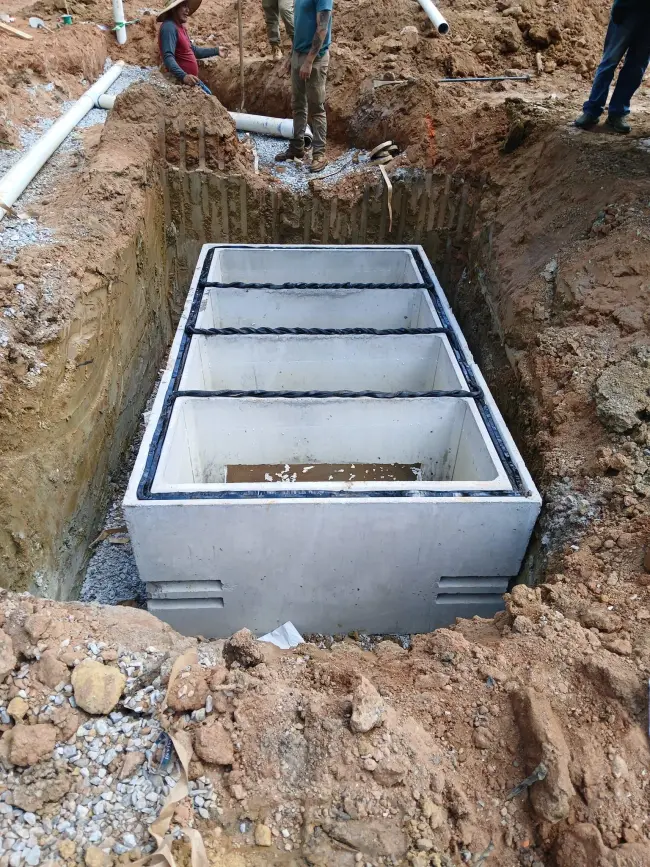
A septic system is not a static installation. It ages. Components that were new at installation deteriorate on different timelines. The drain field soil that was biologically active in year one has absorbed decades of effluent by year twenty-five. The concrete tank that looked structurally sound at the five-year inspection shows internal corrosion at fifteen.
Understanding what to expect and what to watch for at each stage of the system's life allows homeowners to maintain it correctly, budget for future work, and make informed decisions when a contractor tells them something needs attention. It also makes the difference between planned replacement at a convenient time and emergency replacement forced by a system that failed without warning.
Stage One: Installation and the First Year
The installation stage determines more about long-term system performance than any maintenance decision that comes afterward. A system engineered correctly for the specific soil conditions, sized accurately for the household, and installed with properly constructed components will deliver reliable service for 25 to 40 years. A system that skipped adequate soil evaluation, was installed to generic specifications, or incorporated shortcuts in materials or construction will present problems within the first decade.
In North Georgia, the installation process begins with a soil evaluation and percolation test conducted by a licensed professional. The results drive the system design. Drain field sizing, tank capacity, distribution method, and whether the site requires a conventional or alternative system type all follow from that data. A contractor who begins designing before the soil data is in hand is working from assumption.
The First-Year Settling Period
Bacterial populations in a new tank take time to establish at full effectiveness. The system settles mechanically into the ground through its first seasonal cycle of wet and dry conditions. Distribution boxes and risers may require minor adjustment as initial settling occurs. A first-year check, even if brief, confirms everything is operating as designed and establishes the baseline sludge measurement that makes subsequent service intervals accurate rather than estimated.
Stage Two: The Active Service Years
The active service years of a well-maintained septic system should be largely uneventful. This is the stage that runs from year one through roughly year twenty, and the maintenance requirements during this period are consistent and manageable.
The core maintenance rhythm is pumping and inspection every three to five years, with the interval calibrated by measured sludge depth at each visit. Beyond that, the homeowner's role is observation and input control. Walk the drain field periodically, particularly during the spring wet season. Monitor for the early signs of component aging that show up between scheduled service visits.
What Components Are Most Likely to Need Attention
The components that most frequently require attention during the active service years, roughly in order of likelihood, are:
- Outlet and inlet baffles, particularly in concrete tanks, which corrode from hydrogen sulfide exposure over time
- Distribution boxes that settle unevenly as soil moves through seasonal expansion and contraction cycles
- Pump failures in systems with pump tanks, which have a finite mechanical service life
- Root intrusion into older pipe sections on properties with mature trees near the sewer line or drain field
None of these components failing on their own constitutes a system failure. All of them caught during scheduled inspection are manageable repairs. All of them missed and allowed to operate in failed condition for a year or two produce significantly more expensive consequences.
Stage Three: Aging Systems and What Changes
At roughly the twenty-year mark, a well-maintained septic system enters a period that warrants closer monitoring. The specifics vary based on materials and installation quality, but several conditions become more likely in this age range.
Concrete tanks approach the point where internal hydrogen sulfide corrosion has degraded the concrete around the baffles and potentially at the tank joints. Distribution boxes may need replacement rather than re-leveling. Drain field soil has processed two decades of effluent, and while still functional in properly maintained systems, its biological treatment capacity is not what it was in year five.
Inspection intervals that were appropriate every four or five years during the active service stage should shorten to every two or three years for a system in its third decade. The goal is identifying components approaching end of life before they fail rather than discovering failure through symptoms. A tank that passes inspection at year twenty is not guaranteed to pass at year twenty-five. Keep the documentation from each visit and track observations that suggest declining condition.
Stage Four: Planning and Executing Replacement
No septic system lasts indefinitely. When a drain field reaches functional end of life or a tank has deteriorated to the point where repair is not cost-effective, replacement is the appropriate path. In North Georgia, this means beginning the permit process from the start because current regulations may differ from those in effect when the original system was installed, and the county requires a new permit based on current standards.
The difference between planned replacement and emergency replacement is substantial. A homeowner who begins evaluating system condition in the eighteen-to-twenty-year range and starts planning for eventual replacement has time to schedule the project during fall when contractors are easier to book, choose their contractor deliberately rather than under pressure, and budget the cost without the timeline compression that emergency replacement creates.
Emergency replacement after a complete system failure involves expedited scheduling at premium cost, the full disruption of a household without functioning wastewater management, and in some cases temporary permitting complications. Beginning the planning conversation while the system is still functioning is the better path by a significant margin.
Frequently Asked Questions
How long does a septic system last in North Georgia?
A properly engineered and consistently maintained system should last 25 to 40 years. Systems installed without adequate soil evaluation, undersized for site conditions, or neglected during the active service years often fail within 10 to 15 years. Soil conditions at installation, quality of the installation itself, and consistency of maintenance are the three variables that determine actual lifespan.
When should I start planning for septic system replacement?
Begin evaluating replacement potential when your system is in the eighteen-to-twenty-two year range, or earlier if performance indicators suggest the system is aging faster than expected. Starting the planning conversation three to five years before anticipated replacement gives you time to budget, choose a contractor deliberately, and schedule the project at an optimal time rather than under emergency pressure.
Does a septic system replacement in Georgia require a new permit?
Yes. Replacement requires a new permit from the county Environmental Health office, including a current soil evaluation. Regulations may have changed since the original installation, and the replacement system must meet current standards regardless of what the original permit specified.
Plan Ahead With the Right Contractor
Septic & Sewer Solutions works with North Georgia property owners at every stage of the system lifecycle, from new installations to aging system evaluations and eventual replacement planning. If your system is getting older and you want an honest assessment of where it stands, contact us to schedule an evaluation.