Installing a new septic system in North Georgia involves more steps than most property owners expect, and the steps that come before breaking ground matter as much as the installation itself. The decisions made in the planning and permitting phase — soil evaluation, system design, permit application — determine whether the installed system performs reliably for thirty years or needs major intervention within a decade.
The process is not complicated once you understand the sequence. The problems arise when steps are skipped, reordered, or rushed to accommodate a construction timeline that did not account for the full process upfront.
When a New System Is Required
New installations happen in three situations. The first is new construction on a lot that has never had wastewater infrastructure. The second is replacement of a failed existing system. The third is system expansion required by a home addition that increases bedroom count beyond what the current system was permitted to serve. Each situation goes through the same permitting and engineering process regardless of whether the property previously had a system.
Step One: Soil Evaluation Before Everything Else
The soil evaluation is not a first step in a sequence of equal steps. It is the foundational data that every subsequent decision depends on, and it must happen before any design, any contract, and any product specification.
A licensed soil scientist visits the property, digs test pits across the proposed installation area, assesses soil morphology at depth, and conducts a percolation test measuring how quickly water absorbs into the soil at the proposed drain field installation level. The results go to the county Environmental Health office as part of the permit application.
What the Results Mean for Your Project
In North Georgia, perc test results on clay-heavy soils frequently produce design requirements that surprise homeowners who came in with an expectation based on national averages or advice from friends in other regions. A larger drain field footprint, engineered fill in the trench bed, or a shift to an alternative system type are all outcomes that a perc test result can produce. None of these are bad news. All of them are engineering responses to real conditions on the specific property, and all of them are far better discovered during planning than encountered mid-construction.
Do not sign a contract with a contractor before the soil evaluation results are documented. A system recommendation made without that data is guesswork, and guesswork at this stage has a long payment plan.
Step Two: Permit Application Through the County
Georgia septic system permits are issued at the county level. Your licensed contractor prepares and submits the application package to the appropriate Environmental Health office, whether that is Jackson, Hall, Barrow, Banks, or another county.
The application includes the soil evaluation results, a site plan showing the proposed system location with setback distances from property lines, wells, structures, and water features, and the system design specifications. The county reviews for compliance with state standards and issues the permit when the application is complete and acceptable.
Processing typically runs one to three weeks for straightforward applications in North Georgia counties. Alternative system designs and sites with multiple setback complications take longer. Do not schedule equipment or materials delivery until the permit is in hand.
Step Three: Site Preparation
Before installation begins, the site must be prepared to receive the system and the equipment installing it. The scope of site preparation depends on the property's current condition.
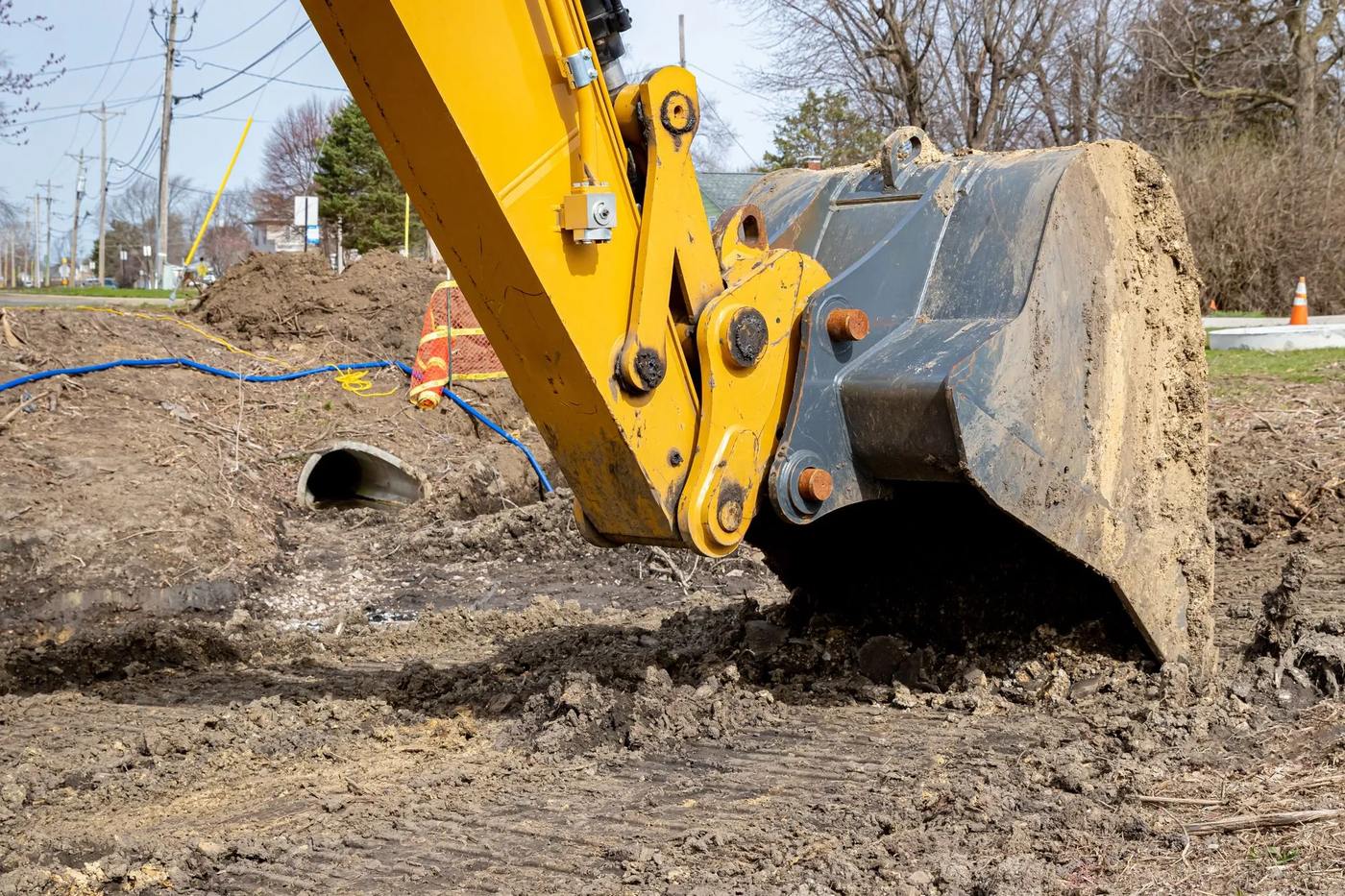
On wooded or heavily vegetated lots, clearing the installation area and establishing equipment access routes comes first. Stump removal from the drain field zone is not optional — stumps left beneath a drain field decay over years and create voids that cause soil settlement above the field lines. Grading to establish proper drainage slopes and create stable equipment access follows clearing.
On properties where construction is already underway, coordinating septic system site preparation with the building footprint and other site work requires deliberate sequencing. The drain field location must be established relative to the building footprint and setbacks before other site work compresses the available options. Getting this coordination wrong early creates real constraints on system design and placement.
Step Four: Installation
The actual installation sequence follows the system design. For a conventional gravity system on a straightforward site, the sequence runs from tank placement and connection to the house main sewer line, through distribution system installation, to drain field trench excavation, pipe placement, gravel installation, and cover.
Timeline varies considerably by system complexity. A conventional system on a flat site with good access may be substantially installed in a single day. Alternative systems with pump tanks, mound configurations, or complex distribution layouts take longer and involve more coordination between installation phases.
The Inspection That Cannot Be Skipped
The county Environmental Health inspector must review the installation while the drain field is still open and visible. This inspection confirms that the installed system matches the permitted design, setback distances are correct, materials meet specifications, and installation quality passes review. The drain field cannot be covered before this inspection occurs.
If a contractor proposes backfilling before inspection, that is a clear signal about their familiarity with Georgia permitting requirements and their respect for the process that protects your investment.
Step Five: Final Approval and Documentation
After passing inspection, the county issues final approval and records the installation. This documentation is the legal record of the system, the starting point for its service history, and the file that will be requested in any future real estate transaction involving the property.
Keep it permanently. The absence of installation documentation on a property sale is a negotiating liability that is far easier to avoid by keeping the paperwork than to correct after the fact.
Frequently Asked Questions
How long does a new septic system installation take from start to finish in Georgia?
From initial soil evaluation through final county inspection, a new septic system installation in North Georgia typically takes four to eight weeks. The majority of that time is in the permitting phase, not the installation itself. A conventional system on a straightforward site may involve only one to two days of active installation work. Complex alternative systems take longer across all phases.
How much does a new septic system cost in North Georgia?
Cost varies based on system type, site conditions, and site preparation requirements. A conventional system on a flat, cleared lot with favorable soil results costs less than an alternative system on a sloped, wooded site with clay soils requiring engineered fill. The perc test result is the primary driver of system type, and system type is the primary driver of cost. Contact us for a site-specific estimate after the soil evaluation is complete.
Does adding bedrooms to my home require a septic system upgrade in Georgia?
Potentially yes. Georgia sizes septic systems by bedroom count, and an addition that increases the permitted bedroom count may exceed the capacity of the existing system. Any addition increasing bedroom count should include a septic system capacity evaluation before construction begins. Discovering the system needs expansion after the addition is complete creates a more complicated and expensive correction than addressing it in the planning phase.
Start Your North Georgia Installation Right
Septic & Sewer Solutions handles new installations across Jackson, Hall, Barrow, Banks, and surrounding North Georgia counties. Every project starts with the soil assessment, not a product catalog. Contact us to schedule your site evaluation.