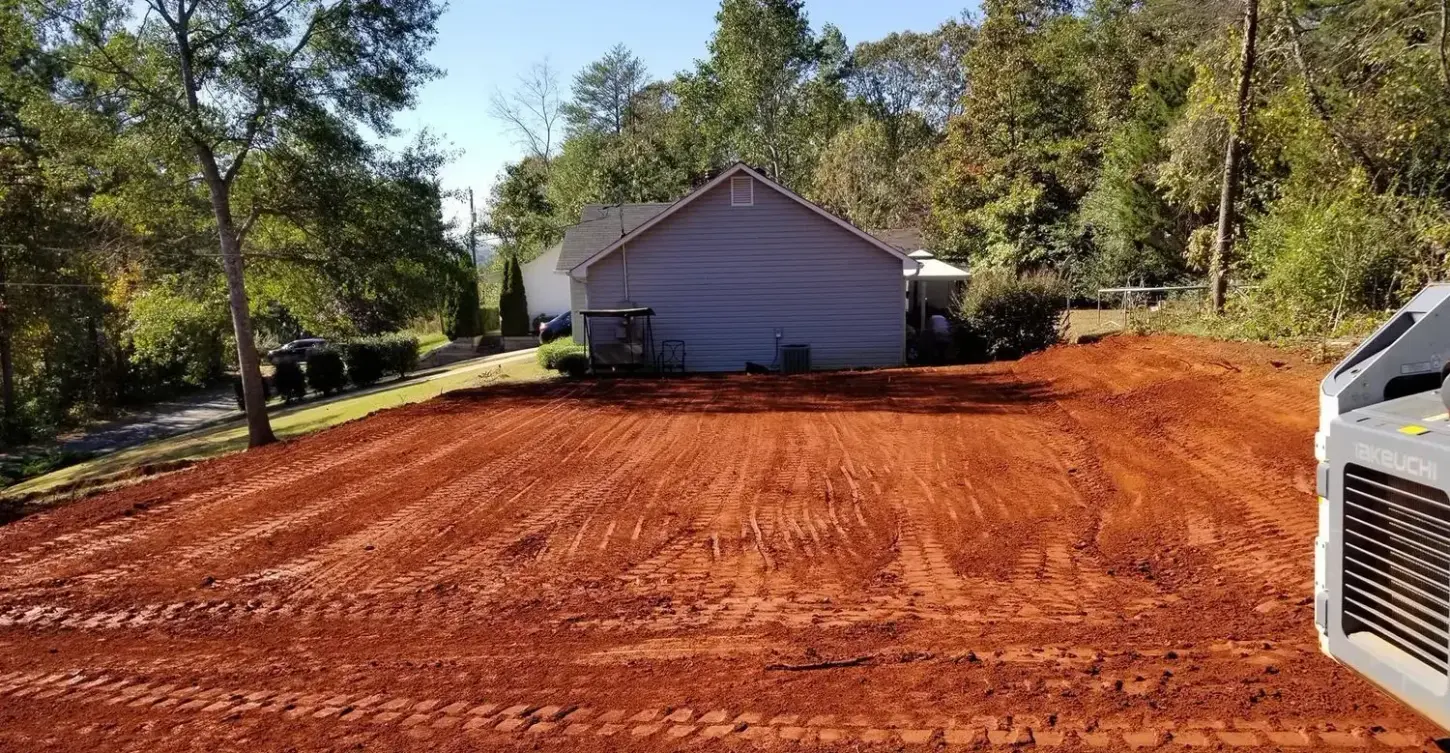
If there is one thing that separates septic system performance in North Georgia from national averages, it is the soil. The red clay that defines the visual landscape of Jackson, Barrow, Hall, and surrounding counties is not just a regional characteristic. It is the engineering constraint that every installation decision responds to, and it is the reason that systems installed to generic national specifications consistently underperform here.
Understanding what red clay does to the treatment process, why it creates seasonal challenges that other soil types do not, and what a properly engineered system accounts for gives you the context to evaluate contractor recommendations and understand why your system behaves the way it does through the year.
What Red Clay Actually Does to Effluent
The drain field's job is to distribute effluent into surrounding soil where naturally occurring bacteria complete the treatment process. For that to work, the soil needs to accept effluent at a rate that keeps pace with the household's daily wastewater volume. The rate at which soil accepts water is what the percolation test measures, and it is the number that drives every downstream design decision.
North Georgia's residual red clay soil, formed from the long-term weathering of crystalline bedrock underlying the Piedmont region, has a naturally low percolation rate. Sandy soils in other parts of Georgia may absorb an inch of water in minutes. North Georgia clay commonly takes an hour or longer for the same absorption. That difference is not a small adjustment to standard design calculations. It is a fundamental constraint that requires a genuinely different engineering approach.
What This Means for Drain Field Design
A drain field sized using national average percolation assumptions will be too small for a North Georgia clay site. Effluent will accumulate in the trench faster than the soil can absorb it, the soil will stay saturated, biological treatment will be compromised, and the field will surface and fail ahead of its expected life. The problem will look like a maintenance failure. It is an engineering failure that dates back to the initial design.
Proper engineering for these soils accounts for the actual measured percolation rate and produces drain fields that are larger in total area, sometimes significantly, than what standard tables would suggest. Some sites also require engineered fill material in the trench bed to create a more permeable medium between the pipe and the native clay, improving drainage while native soil biology handles the treatment.
Soil Depth and Restrictive Layers
Percolation rate is one variable. Soil depth is another, and it is less commonly understood.
Georgia's on-site sewage management regulations require a minimum depth of suitable soil for biological treatment between the drain field installation depth and what are called restrictive layers below. Restrictive layers are zones where soil conditions prevent adequate downward movement of effluent, whether through dense clay, saprolite, or partially weathered bedrock near the surface. Effluent that encounters a restrictive layer before adequate treatment has occurred cannot continue to move through the soil effectively.
In North Georgia's foothills and upland areas, restrictive layers occur at varying depths across even a single parcel. A site that looks buildable from the surface may have a saprolite layer at 18 inches in one section and four feet in another. This variability is why the soil morphology assessment conducted during the site evaluation involves digging multiple test pits across the proposed installation area rather than a single point sample. The professional conducting the evaluation is mapping where sufficient treatment depth exists and siting the system accordingly.
When Soil Depth Rules Out Conventional Installation
Sites where the treatment zone between the drain field depth and the restrictive layer is insufficient for a conventional installation require a different design response. Mound systems elevate the drain field above the natural restrictive layer into imported fill with adequate depth and permeability for treatment. They are more common across the rolling terrain of this region than buyers of rural parcels typically expect, and they are the correct engineering response to a real soil condition rather than an unnecessary upgrade.
The Spring Saturation Problem Specific to This Region
North Georgia's March through May wet season creates a soil condition that compounds the clay permeability challenge in a way that is specific to this region and its rainfall patterns.
When sustained spring rainfall saturates the clay, the soil's effective absorption capacity drops further than its baseline percolation rate would suggest. The water table rises, the pore spaces in the clay that allow downward movement of effluent fill with rainwater, and the drain field is left competing with groundwater for the same absorption capacity. A system sized adequately for the soil's dry-condition percolation rate but not for its wet-season state will show stress during this period regardless of maintenance practices.
This seasonal behavior is why properly designed North Georgia systems build conservative margin into the drain field sizing rather than engineering to the minimum the perc test technically permits. A field sized at the minimum passes the permit standard. A field sized with appropriate margin for wet-season variability performs reliably through a wet April and recovers to normal function when conditions dry. That difference determines whether the system creates seasonal headaches for the homeowner or simply works year-round.
What This Means Before You Buy Land
Undeveloped land in North Georgia that does not have an existing septic system requires a soil evaluation before any assumption of residential buildability is reliable. Parcels that look like ideal building sites from the road sometimes have percolation rates that will not support any permitted system type. Others that look marginal at first assessment have adequate soil in a specific location on the parcel that a careful evaluation identifies.
Do not purchase raw land for residential development in North Georgia without a licensed soil scientist evaluating the specific parcel first. The perc test result is not a regulatory formality. It is the fundamental determinant of whether the land can be developed for residential use, what system type is required, and what the site preparation scope will need to be.
Frequently Asked Questions
Why does North Georgia's red clay make septic installation harder than other parts of Georgia?
Red clay has a naturally low percolation rate, meaning water moves through it slowly. Drain fields require the surrounding soil to absorb effluent at a rate that keeps pace with daily household wastewater volume. When soil absorbs slowly, standard drain field designs underperform or fail. Systems in North Georgia must be specifically engineered with larger field areas, engineered fill, or alternative distribution methods to compensate.
How does a percolation test work and who conducts it in Georgia?
A licensed soil scientist or environmental health professional digs test pits on the property, evaluates soil morphology at depth, and measures how fast water absorbs into the soil at the proposed drain field installation level. Results are submitted to the county environmental health office as part of the permit application. Georgia requires this evaluation before any septic system permit is issued, and the results drive the system design.
Can a septic system fail because of soil conditions even if it was properly maintained?
Yes. A system installed without adequate accounting for actual soil percolation rates or restrictive layer depth can fail through normal daily use even with perfect maintenance practices. This is an installation engineering failure, not a maintenance failure, and it is the most common root cause of early system failure in North Georgia. The solution is correct engineering at installation, which starts with honest soil evaluation results.
Start With the Soil
Septic & Sewer Solutions begins every project with a complete site assessment because the soil determines what the system needs to be. If you are planning a new installation or evaluating land in North Georgia, contact us before any design decisions are made.