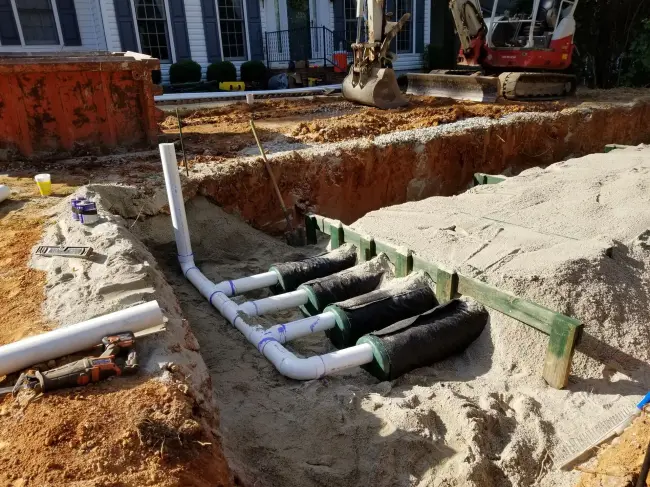
There are essentially two approaches to septic system ownership. The first is reactive: you use the system, do not think about it, and call a contractor when something fails. The second is proactive: you maintain the system on a schedule, observe it periodically, and address conditions at the stage where they are still minor.
The difference between these two approaches is not primarily philosophical. It is financial, and the gap is significant. Reactive ownership produces emergency service calls, drain field remediation, and in the worst cases complete system replacement at compressed timelines that limit options and drive up costs. Proactive ownership produces pump-out receipts, baffle replacement receipts, and occasionally a distribution box re-leveling. The cumulative cost over the life of the system is not comparable.
In North Georgia, where clay-heavy soils create additional drain field stress that sandier-soil regions do not face, the case for proactive management is stronger than national averages suggest. The margin for neglect is narrower here.
What Proactive Management Looks Like in Practice
A Pumping Schedule That Comes From Data
The first and most consequential proactive behavior is pumping on a schedule calibrated to your system's actual accumulation rate rather than a generic calendar interval.
This requires a technician who measures sludge depth at each service visit and records the measurement. That data, tracked across visits, tells you how quickly your household accumulates sludge in the specific tank on your property. A household of five with heavy garbage disposal use accumulates sludge faster than a couple without one, and the correct pumping interval for each is different. Setting that interval from measured sludge depth at your tank is a proactive practice. Pumping every five years because someone told you to pump every five years is not.
Seasonal Drain Field Observation
One of the highest-value proactive behaviors costs nothing and takes five minutes. Walk the drain field area three to four days after a significant rainfall event during the spring wet season, specifically noting ground condition above the field lines. Ground that stays soft and wet when the surrounding yard has firmed up is telling you the field is under stress. Catching that observation during the first spring it appears, when the field may still be recoverable with a load reduction and a service call, is a fundamentally different situation from discovering it in year three of the same pattern when the field is exhausted.
That observation, shared with your service provider at the next visit, is more useful than any inspection conducted without it, because it documents how the field behaves under maximum seasonal stress conditions that a scheduled service visit in October cannot replicate.
Component Condition Tracking
Proactive management requires eyes on component condition at each service visit, not just on the sludge level. Baffle condition, distribution box level, pump function in systems with pump tanks, and inspection port status all change gradually over the system's life. Tracking those observations across visits identifies which components are approaching end of life before they fail.
A tank that showed minor baffle corrosion at year fifteen and significant corrosion at year seventeen is telling you the baffle needs replacement before year nineteen. A distribution box that was level at year ten and slightly settled at year fifteen may need re-leveling before the uneven distribution begins damaging the drain field. These are proactive repairs. The drain field damage that results from the baffle failure or the settled distribution box going unaddressed is a reactive repair, and it costs far more.
Record-Keeping
Written documentation of every service visit, including component condition observations and sludge depth measurements, is the foundation of proactive management over the system's life. That record:
- Establishes the service history that informs accurate interval-setting at each visit
- Provides the documentation that any future real estate transaction will request
- Creates the evidence base for evaluating contractor recommendations over time
- Documents responsible ownership if any environmental health inquiry arises
A homeowner who cannot produce any service records for a system they have owned for fifteen years does not know whether that system has been maintained or not. A homeowner with a documented service history knows exactly where the system stands and can make informed decisions about it.
What Gets in the Way of Proactive Management
The single most common barrier is the invisibility of the system. A system that is causing no obvious problems is easy to deprioritize in a household with competing demands on time and money. The pump-out that was due last spring becomes next spring, which becomes the spring after that, and four years of deferred pumping means the tank has been at or over its effective capacity for a year before the symptoms finally appear.
The second barrier is the absence of a service provider who documents findings rather than just performing the service. A pump-out without sludge depth measurement and written component assessment provides no data for the homeowner to make informed decisions from. If your current provider is not giving you written documentation of what they find at each visit, that is the first thing to change.
Frequently Asked Questions
How long can a septic system last with consistent proactive management in North Georgia?
A properly engineered system that is consistently maintained — pumped on a data-calibrated schedule, inspected for component condition, with issues addressed at the minor stage rather than the failure stage — should deliver 30 to 40 years of reliable service in North Georgia. Systems managed reactively, where the first attention they receive is when something fails, often require significant repair or replacement within 15 to 20 years.
What is the single most impactful proactive behavior for septic ownership?
Pumping on a schedule derived from measured sludge depth at your specific tank, not from a generic calendar recommendation. This prevents the solid overflow that causes drain field contamination, which is the most expensive and most common failure mode. Every other proactive behavior is secondary to this one.
How do I find a contractor who provides proactive management rather than just performing the minimum service?
Ask specifically for written documentation of component condition at each service visit, including sludge depth measurement, baffle assessment, and distribution system evaluation. A contractor who provides that documentation is giving you the information you need to manage the system proactively over time. One who performs the pump-out and leaves without documentation is providing a transaction rather than a service relationship.
Manage Your System Before It Manages You
Septic & Sewer Solutions documents findings at every service visit across North Georgia and gives property owners the written record they need to make informed decisions about their systems. If you want to shift from reactive to proactive management, contact us to schedule a full system evaluation.