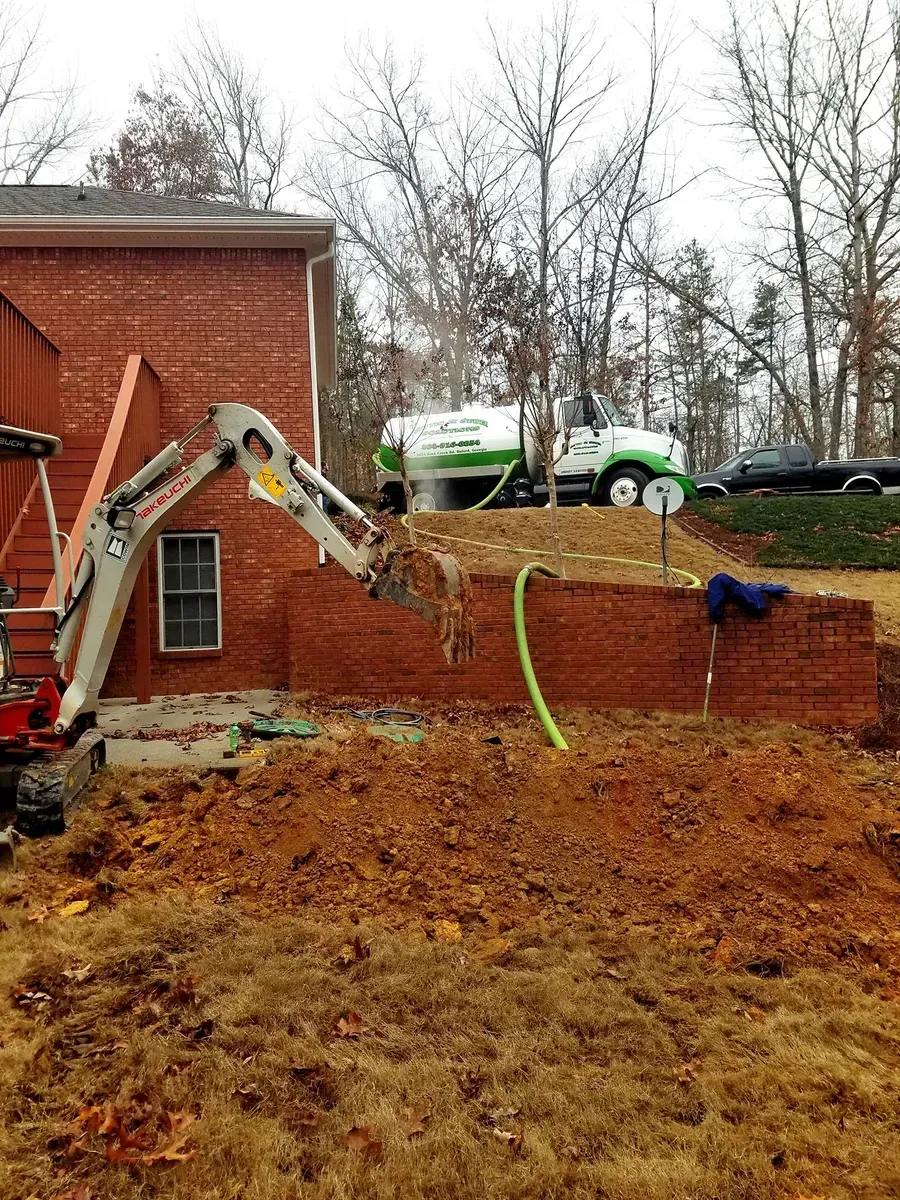
Most homeowners think about this relationship in one direction — how to keep the septic system from damaging the yard. The more important direction runs the other way. The decisions made in the yard above the drain field directly determine how long that field lasts and whether it performs reliably through 30 years of service or struggles through the first ten.
Soil compaction, inappropriate plantings, vehicle traffic, and surface drainage patterns all affect drain field performance in ways that are invisible until they have been accumulating for years. Understanding what the drain field needs from the yard above it, and what threatens it, is the foundation of protecting a significant property investment.
What Belongs Over a Drain Field
Grass is the correct and recommended cover for a septic drain field in North Georgia. It holds soil in place, absorbs surface moisture, allows air exchange in the soil, and does not develop a root system that threatens the pipes or gravel structure beneath. The specific grass species that performs best depends on sun exposure.
Bermuda grass handles the heat and direct sun that most drain field areas in this region receive during summer. Zoysia performs similarly and tolerates some shade. Tall fescue works in shadier locations where warm-season grasses struggle. Maintain the grass normally and it does its job without any additional management.
Shallow-rooted ground covers are acceptable where aesthetics are a priority, provided they stay low and do not develop significant woody stems or root mass over time. Clover and creeping thyme are reasonable options in the right context. The test is whether the plant's roots stay near the surface and whether it requires digging, irrigation, or soil amendment to maintain — all of which disqualify it for a drain field.
What Does Not Belong Near Septic Infrastructure
Trees and Large Shrubs
This is the most consequential landscaping decision on a property with a septic system. Tree roots pursue moisture. The damp soil around a drain field is a consistent and reliable moisture source, and root systems will find it regardless of what is planted where. The physical damage from roots entering pipe perforations, fracturing clay tile joints, and disrupting gravel structure accumulates over years and eventually requires excavation to correct.
The general guideline is no trees within 30 feet of the drain field and no large shrubs within 20 feet. Species vary in how aggressively their roots travel. Silver maples, weeping willows, and sweetgums have root systems that extend well beyond their visible canopy and warrant more conservative setbacks on the short end of those ranges. Fruit trees and ornamental maples planted with good intentions near a drain field may seem harmless for the first five years and cause significant damage in year eight.
If you are purchasing a property in North Georgia where mature trees exist closer than these distances to the drain field, a camera inspection of the drain field pipes is a worthwhile part of due diligence before closing.
Vegetable Gardens
Do not plant vegetable gardens over a drain field. The issue is not system performance — it is food safety. Wastewater contact with edible plants creates a health risk regardless of how well the system is functioning. The recommendation applies even to systems performing perfectly, because the contact pathway exists whether or not the system is stressed.
Hardscaping
Concrete slabs, pavers, gravel beds, raised decks, and other impermeable surfaces over the drain field block air exchange, prevent evapotranspiration that aids drainage, and in the case of heavy structures, load the soil in ways that compact it. Keep the drain field area permeable and at natural grade.
The Compaction Problem on North Georgia Clay
Soil compaction deserves its own attention in this region because clay soil is significantly more susceptible to compaction damage than sandy or loamy soils. The same level of mechanical loading that has minimal effect on sandy soil compresses clay structure meaningfully and permanently. Permeability that was already limited becomes more limited, and the affected section of the drain field absorbs effluent less effectively from that point forward.
The sources of compaction to watch for include:
- Vehicles driving or parking over the drain field, including during contractor work, deliveries, or events with unusual parking arrangements
- Heavy lawn equipment operated repeatedly across the same path over the field
- Heavy foot traffic concentrated in one area over time
- Construction or landscaping equipment accessing adjacent areas through the field footprint
Mark the drain field boundaries clearly before any work is done on the property and communicate those boundaries to every contractor who works there. A single equipment pass during a project that never involved the septic system can cause compaction damage that affects the field for the rest of its service life.
Reading Your Yard for What the System Is Telling You
The yard above a drain field produces visual signals about system health that no service visit can fully replicate because no service visit happens daily. Three patterns are worth knowing.
Consistently wet or soft ground directly above the drain field lines during dry weather means effluent is surfacing. Ground that is soft above the field lines when the rest of the yard is firm is telling you something. Soft ground immediately after a heavy rain event is a different matter and does not carry the same meaning.
A distinct stripe of darker, faster-growing, greener grass running directly over the field lines, noticeably different from adjacent lawn areas in the same conditions, indicates effluent is reaching plant roots closer to the surface than the treatment process requires.
Dead or brown grass directly above the field lines while surrounding areas are healthy can indicate the opposite of what you might expect — a section of the field that is not receiving effluent because of a distribution problem upstream, leaving the soil over that section dry while an adjacent section is overloaded.
All three patterns are worth sharing with your service provider at the next inspection.
Frequently Asked Questions
What is the best grass for a septic drain field in North Georgia?
Bermuda grass for sunny areas and tall fescue for shadier locations are the most reliable options in this climate. Both are shallow-rooted, tolerate the conditions above a drain field, and do not require soil amendment or intensive management. Avoid ground covers that develop woody stems or require periodic digging to maintain.
How far should trees be planted from a septic drain field?
A minimum of 30 feet from the drain field and 20 feet from the septic tank and connecting pipes as a general guideline. Species with aggressive lateral root systems warrant larger setbacks. If mature trees already exist closer than these distances on a property you are purchasing, a camera inspection of the drain field pipes is a valuable pre-purchase evaluation step.
Can driving over a drain field once cause permanent damage in Georgia clay?
Yes. A single pass with a loaded vehicle, including pickup trucks and SUVs, across a clay-soil drain field can cause meaningful and permanent compaction. Clay soil does not recover its structure after significant compression the way sandy soil does. The damage reduces absorption capacity in the affected area for the life of the field.
Protect Your Drain Field From the Ground Up
Septic & Sewer Solutions serves North Georgia property owners across Jackson, Hall, Barrow, and surrounding counties. If you have questions about landscaping decisions near your drain field or want an evaluation of your system's current condition, contact us for a site assessment.