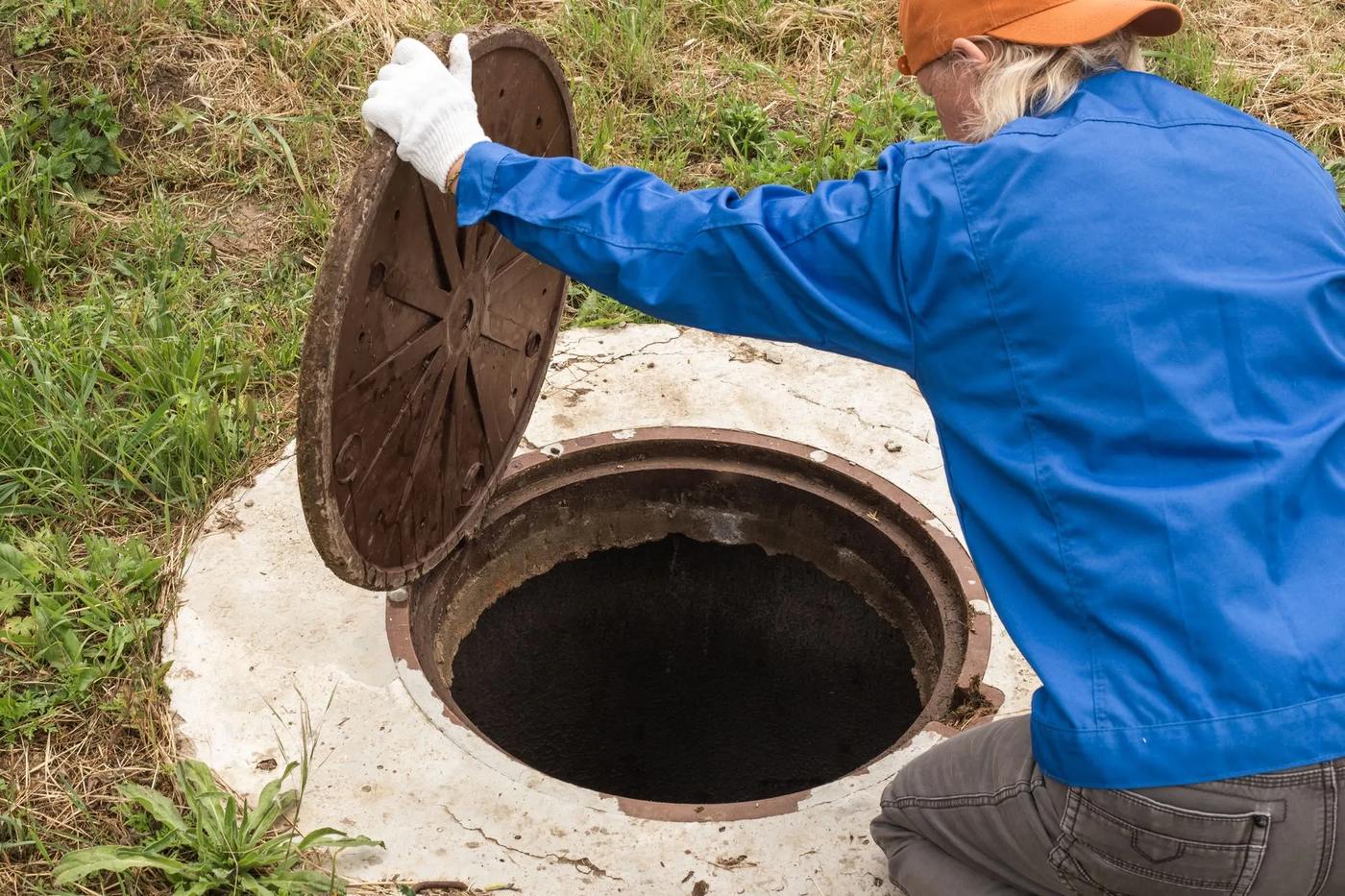
Pumping your septic tank on schedule is the most important maintenance decision a homeowner makes. But pumping is not inspection. A pump-out empties the tank. An inspection evaluates whether the components that make the system work are still doing their jobs.
The failures that end in drain field replacement do not happen suddenly. They develop over years through baffle deterioration, accumulated sludge, gradual distribution imbalance, or slow root intrusion. A pump-out removes waste from the tank. It does not catch a corroding outlet baffle, a distribution box that has settled three inches to the left, or root tendrils just entering the pipe joints at the far end of the drain field. A proper inspection catches all of those things at the stage where intervention is still a manageable repair rather than an excavation project.
What a Proper Septic Inspection Actually Covers
Tank Access and Sludge Measurement
The inspector opens the tank lids and measures sludge depth at the bottom and scum depth at the top. These measurements determine whether pumping is needed at that visit and set the recommended interval until the next service. This is the most reliable way to calibrate a pumping schedule because it reflects actual accumulation in your specific system rather than a generic calendar recommendation.
Baffle Condition
The inlet and outlet baffles inside the tank direct flow and prevent solids from escaping into the drain field. Concrete baffles in tanks installed before the 1990s corrode over time from hydrogen sulfide exposure inside the tank. Plastic tee baffles can separate from their fittings. A failed outlet baffle is among the most common causes of drain field contamination, and it produces no obvious symptom until solids have been escaping into the field for months. Inspection catches this. Routine pumping without inspection does not.
Distribution System Evaluation
The inspector assesses whether effluent is reaching the drain field evenly across all lines. An unbalanced distribution box, common in systems that have settled over years of soil movement, causes one section of the drain field to carry disproportionate load while other sections receive little. On North Georgia clay-soil properties where absorption capacity is already more limited than in sandier regions, this imbalance accelerates failure in the overloaded section considerably faster than it would elsewhere.
Drain Field Observation
The inspector walks the drain field area looking for soft or wet ground, surface odors, or unusually lush vegetation that indicates effluent is reaching the surface rather than absorbing at depth. In North Georgia, this assessment is most informative when conducted just after a wet spring period when absorption stress is at its seasonal peak. A field showing saturation symptoms in April that the homeowner never noticed during the summer or fall may have been quietly struggling for two full growing seasons.
Pump and Float Check Where Applicable
Systems with pump tanks require evaluation of the pump itself, the float switches that trigger dosing cycles, and the alarm system. A pump that is cycling irregularly or floats that have drifted out of calibration can cause dosing failures that stress the drain field without producing any visible yard symptom until the problem is well established.
How Often and When
The Standard Interval
Every three to five years aligned with pumping service is the standard professional recommendation for most residential systems in North Georgia. In practice, several factors shorten that interval appropriately.
Properties on clay-heavy soils where drain field performance is more variable warrant inspection on the shorter end of that range. Systems more than 20 years old should be on a shorter cycle because concrete tanks in that age range are candidates for baffle failure and may show early signs of structural degradation that warrant planning for eventual replacement. Any system with a history of performance issues benefits from more frequent eyes on the components.
Before Buying a Home
A pre-purchase septic inspection in North Georgia is not legally required, but it is one of the highest-value due diligence steps available to any buyer. Standard home inspections do not assess septic systems. A camera inspection of the drain field lines and a full tank and component evaluation before closing reveals conditions the seller may be unaware of and that will be your financial responsibility the day after closing. Root intrusion requiring excavation, a failed baffle that has been sending solids to the drain field, a tank approaching the end of its structural service life, all of these are conditions that change either the purchase price negotiation or the decision to buy.
What Consistent Inspection History Protects
A system that has been regularly inspected and serviced comes with documentation. That documentation matters in two situations most homeowners do not anticipate until they are in the middle of them.
First, if a complaint or environmental health inquiry arises related to wastewater management on your property, a documented inspection and maintenance history is your evidence of responsible ownership. Second, when the property sells, buyers and their agents increasingly ask for septic service records. The absence of any documentation is a negotiating liability. A complete record of inspections, component condition, and service intervals is a quiet asset that supports the asking price.
Frequently Asked Questions
How often should a septic system be inspected in Georgia?
Every three to five years for most residential systems, aligned with pumping service. Older systems, clay-soil properties, and systems with any history of problems warrant the shorter end of that range. Pre-purchase inspections should happen before any property changes hands regardless of when the last scheduled service occurred.
What does a septic inspection cost compared to the repairs it prevents?
Inspection cost varies based on system type and access conditions but is substantially less than any repair that a skipped inspection allows to develop. The cost of catching a failed outlet baffle during a scheduled inspection versus discovering drain field contamination six months later is not a meaningful comparison. The inspection pays for itself in the first problem it catches.
Can a septic inspection be required before selling a home in Georgia?
Georgia does not legally mandate a septic inspection before a home sale. However, buyers routinely request them and lenders may require them on certain loan types. A seller who can provide documented inspection and service history is in a stronger negotiating position than one who cannot produce any records.
Schedule Your North Georgia Septic Inspection
Septic & Sewer Solutions provides thorough inspections with written findings at every service visit across Jackson, Hall, Barrow, and surrounding counties. We document component condition, measure sludge depth, and give you a specific recommended service interval, not a generic receipt. Schedule your inspection today.